
Want your car to stay road legal?
As a new car owner, the MOT test can be a source of confusion and frustration.
But here’s the thing…
Understanding MOT testing services is one of the most important things any vehicle owner can do. Without a valid MOT certificate, driving on UK roads is illegal. And not only will you be fined up to £1,000, but it can also cause significant problems with your insurance.
The good news?
Passing your MOT test is much easier when you know what to expect. That’s why this guide covers everything new car owners should know about the MOT process.
What you’ll learn:
- What Is An MOT Test?
- When Do You Need Your First MOT?
- Common MOT Failure Reasons
- How To Prepare Your Car For The MOT
- What Happens If You Fail?
What Is An MOT Test?
An MOT test is a series of checks to see if your vehicle meets the legal requirements to be driven on the road. The test covers all aspects of vehicle safety and roadworthiness, including tyres, brakes, lights, windscreen wipers and washers, seatbelts and much more.
The MOT test also checks that your vehicle’s emissions do not exceed the legal limits. The annual MOT certificate is proof that your vehicle has passed all these tests and is road legal.
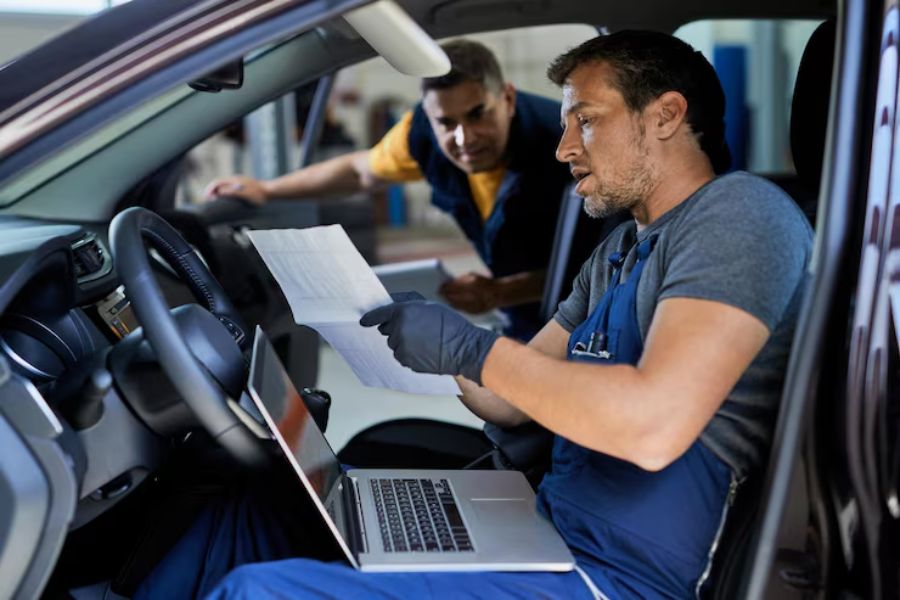
The MOT test is carried out by a certified MOT tester at an approved testing centre. If you’re looking for MOT testing in Chatham or the surrounding areas, choose a certified centre with experienced testers that can explain things in plain English and give honest advice.
Here’s something most new owners don’t know, though…
The MOT certificate is only a snapshot of the condition of your vehicle on the test date. It is not a guarantee that the vehicle will remain roadworthy until next year’s MOT test. To keep your car in good condition, regular maintenance between MOT tests is still required.
When Do You Need Your First MOT?
New cars do not need an MOT until they are three years old.
For new car owners, the first MOT is due on the third anniversary of the registration date. After that, MOT tests are required every single year.
Older used cars may have an MOT due date in the next few months, so it is worth checking when the current certificate expires.
Important MOT dates to remember:
- New cars: First MOT is due three years from registration date
- Used cars: Check when current MOT certificate expires
- All vehicles: Annual MOT test is required after the first one
You can also book your MOT up to one month early without losing any time on your next certificate.
Common MOT Failure Reasons
The RAC analysis of DVSA data revealed that more than one-quarter (25.5%) of all MOT failures were due to lighting and signalling defects.
That’s a higher proportion than any other single issue category. The top causes of MOT failure are usually some of the most simple and inexpensive repairs.
The main categories of MOT failure are:
- Lighting issues (25.5%): includes blown bulbs, non-working indicators, broken brake lights
- Suspension issues (19.4%): worn shock absorbers, damaged springs
- Brake defects (16.4%): worn pads and discs, corroded parts, handbrake issues
- Tyres (12%): insufficient tread depth, visible damage
- Visibility (8.7%): cracked windscreen, broken wipers
It’s very annoying that these issues account for such a high percentage of MOT failures, because many could be avoided by drivers themselves.
Official government statistics show that more than 28% of cars and vans failed their MOT in the last 12 months. That means more than one in four cars tested did not meet minimum roadworthiness standards.
How To Prepare Your Car For The MOT
The best way to prepare your car for the MOT is to carry out a few simple checks before the test.
Start with a basic visual inspection. Walk around the car and check that all the lights work properly. This includes headlights, brake lights, indicators, fog lights and number plate lights. Ask someone to help by pressing the brake pedal while you check the rear lights.
Pay particular attention to your tyres. The legal minimum tread depth is 1.6mm across the central three-quarters of the tyre. To check, insert a 20p coin into the tread grooves. If you can see the outer band of the coin, you need new tyres.
Check the basics as well:
- Windscreen washer fluid is topped up
- Wipers clear the screen effectively
- Mirrors are not damaged or loose
- Horn works
- Handbrake holds on a slope
Listen out for strange noises from your car. Unusual brake sounds, suspension knocks or exhaust rattles should be investigated and fixed before the MOT.
What Happens If You Fail?
MOT failures are not the end of the world.
If a car fails, the MOT tester will give you a document that lists all the issues that need repairing. The faults are colour-coded by severity. Dangerous and major faults must be fixed before you can drive the car legally.
After a failure, you have options:
- Get repairs done at the testing centre (often with a free retest included)
- Take the car away to get it repaired and return for a retest
- Minor faults may result in a pass with advisories
Most testing centres offer a free retest within a certain period if you get repairs done at the same garage.
One word of warning…
Driving a car that has failed for dangerous defects is illegal and will invalidate your insurance. Make sure all repairs are completed before driving the car again.
Wrapping It All Up
The MOT test exists for the safety of everyone on the road.
Understanding MOT testing services is vital for new car owners. It removes anxiety and helps prevent avoidable failures.
Nine times out of ten, MOT failures are the result of simple issues with lights, tyres, or brakes. These are things that the average driver can and should check before the MOT.
The MOT test can seem like a pain and an expensive addition to your budget. But in reality, it’s a safety check that protects you and your passengers, as well as other road users. Treat it seriously, prepare well, and it becomes a simple process.
Do your regular maintenance throughout the year, and MOT day is much less stressful. A well-maintained vehicle should have no real surprises on MOT day. And that peace of mind is priceless.
